


Density RF skin tightening
Firmer skin on the face, neck, and body. No needles, no incisions, no downtime. Performed under physician supervision at VIDA's Quad A accredited facility in Tijuana.
Density is a non-invasive radiofrequency treatment that firms and tightens skin by heating the layers where collagen is built. It is not a laser. Developed by Jeisys Medical, the device delivers two kinds of RF energy in sequence: monopolar RF at 6.78 MHz that reaches the deep dermis, subcutaneous tissue, and fascia, and bipolar RF that works closer to the surface for texture and immediate firmness. The controlled heat causes existing collagen fibers to contract and signals the skin to produce new collagen over the following weeks. A session takes about 30 to 45 minutes, most patients need no anesthesia, and normal activity resumes the same day. At VIDA Wellness and Beauty Center, Density is performed by trained providers under physician supervision, in the same accredited facility where our surgical teams work.
What it is: dual-mode radiofrequency (monopolar + bipolar) for skin tightening. Not a laser.
What it treats: laxity on the face, jawline, neck, and body areas such as the abdomen, arms, and thighs.
Sessions: most patients see improvement after 1 or 2 treatments spaced 4 to 6 months apart.
Feels like: deep warmth with adjustable cooling. Most patients rate it mild.
Downtime: none. Possible redness or warmth for a few hours.
Results: early firmness within days for some patients; the main change builds over 8 to 12 weeks as new collagen forms, with published follow-up out to 24 weeks.
Two energies, one pass
Most radiofrequency devices choose one depth. Density fires two in sequence from the same tip.
The first is monopolar RF at 6.78 MHz, the same frequency class used by the best-known skin tightening platforms. It passes through the skin and concentrates heat in the deep dermis, the subcutaneous layer, and the fascia. That heat does two things: it makes existing collagen fibers contract, which can read as early firmness, and it triggers the wound-healing response that produces new collagen over the following weeks.
The second is bipolar RF, which stays in the upper dermis. This is the layer that controls texture, pore appearance, and surface firmness.
Jeisys calls the combination Sequential RF Pulsing, and reports it stimulates up to five times more collagen than monopolar RF alone. Two systems keep the treatment controlled: real-time calibration that reads your skin’s resistance and adjusts the energy on every pulse, and adjustable contact cooling that protects the surface while the heat does its work below.
Where we use it
Face. Softening of the jawline, early jowls, nasolabial folds, and general laxity in the cheeks and lower face. This is the most common request.
Neck and under the chin. Crepey texture and loose skin in the neck, where surgical options feel like too much and creams do nothing.
Body. Skin laxity on the abdomen, upper arms, and thighs, including skin that loosened after weight loss. For patients on GLP-1 medications who like the number on the scale but not the skin that came with it, Density is one of the tools we reach for first.
What to expect, and when
Results from collagen remodeling are gradual by design, and they vary from person to person. The honest timeline looks like this:
- First days. Some patients notice early firmness as heated collagen fibers contract. Others notice nothing yet. Both are normal.
- Weeks 4 to 12. New collagen production ramps up. This is where jawline definition and skin quality changes typically become visible in photos, not just in the mirror.
- Months 3 to 6. Remodeling continues. In a 2025 peer-reviewed pilot study, patients treated with a single Density session showed measurable improvement in skin laxity through 24 weeks of follow-up.
- Maintenance. New collagen does not wear off, but skin keeps aging on its own schedule. Jeisys recommends 1 to 2 treatments spaced 4 to 6 months apart to build the result, and many patients maintain with a single annual session.
Before and after
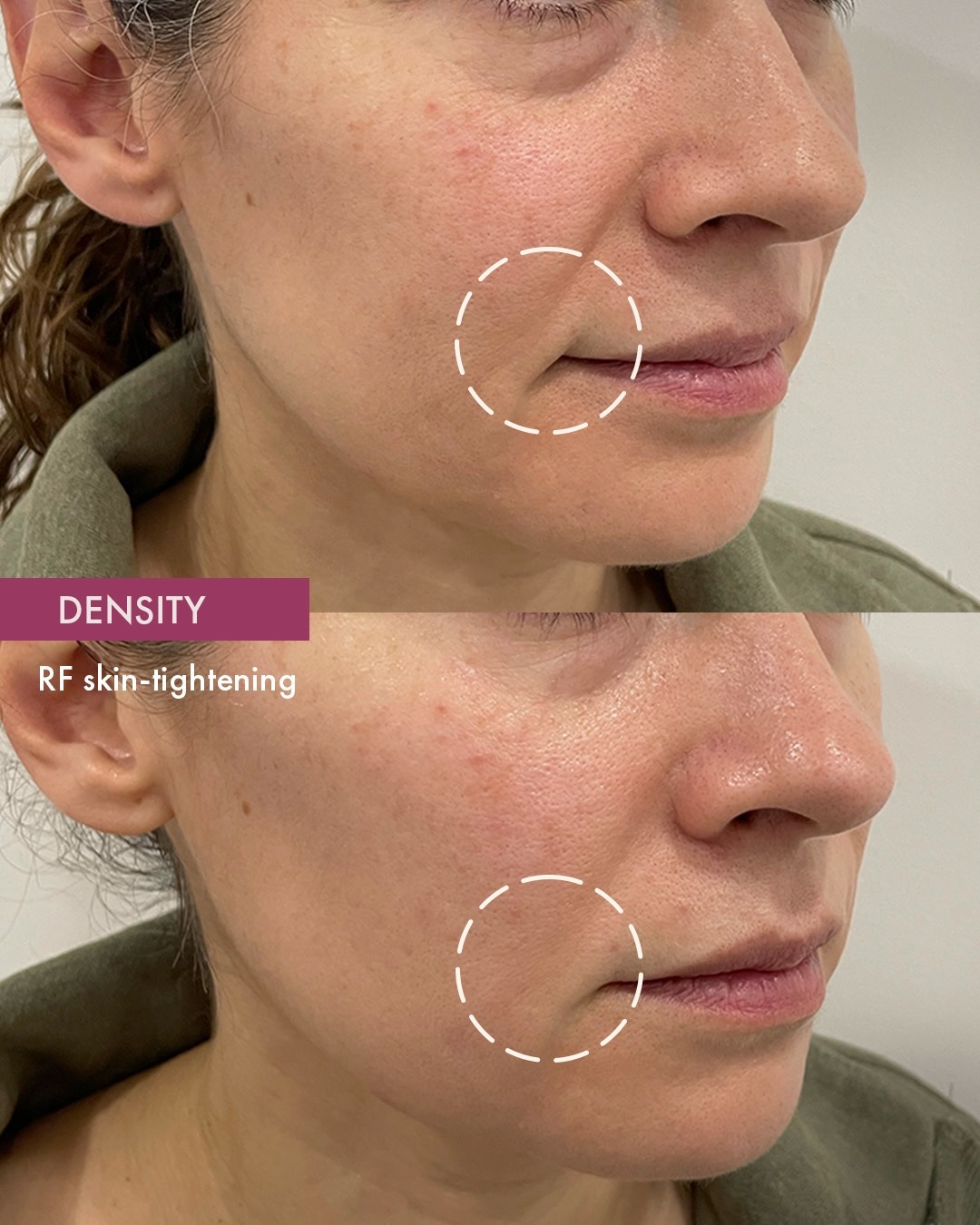
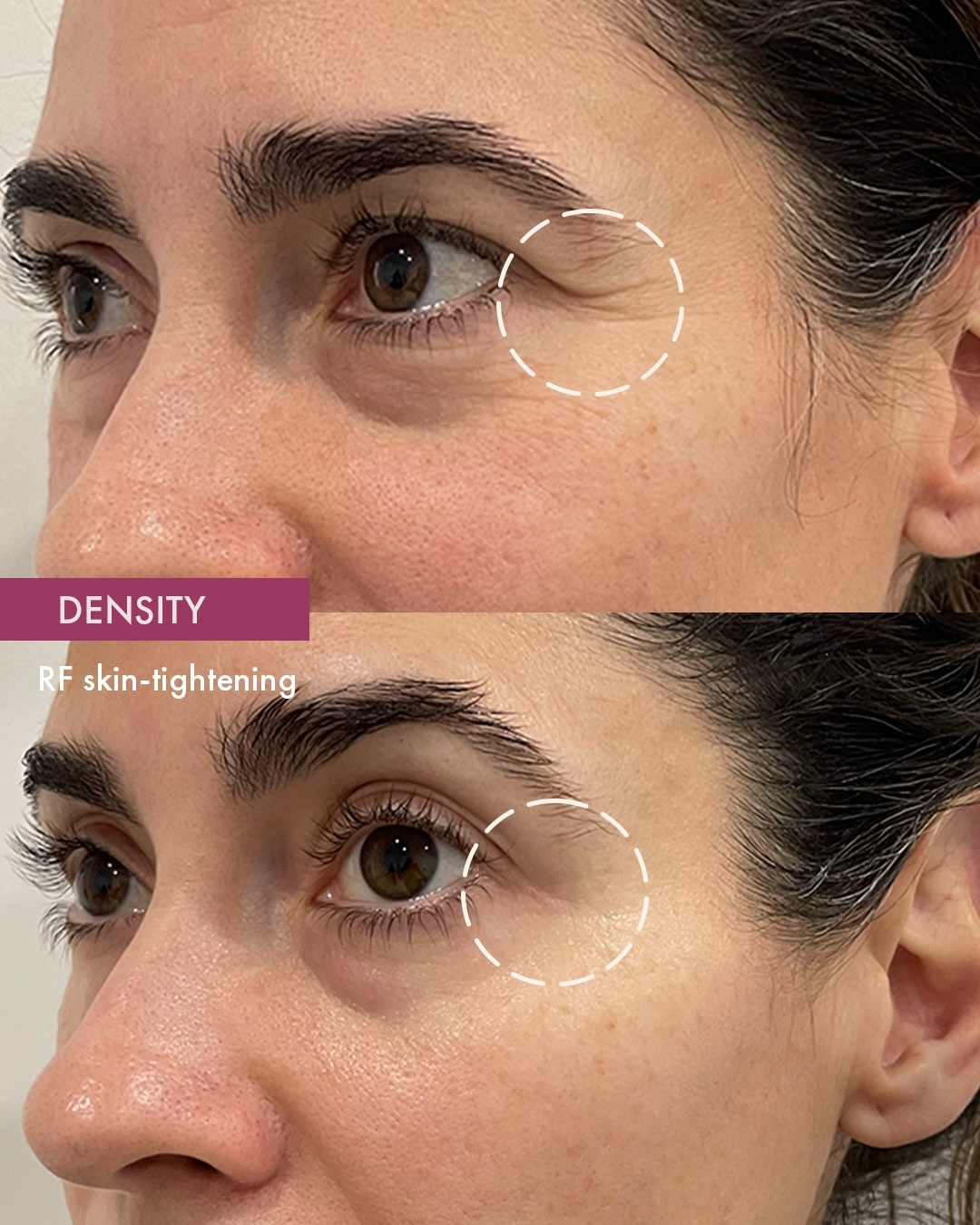
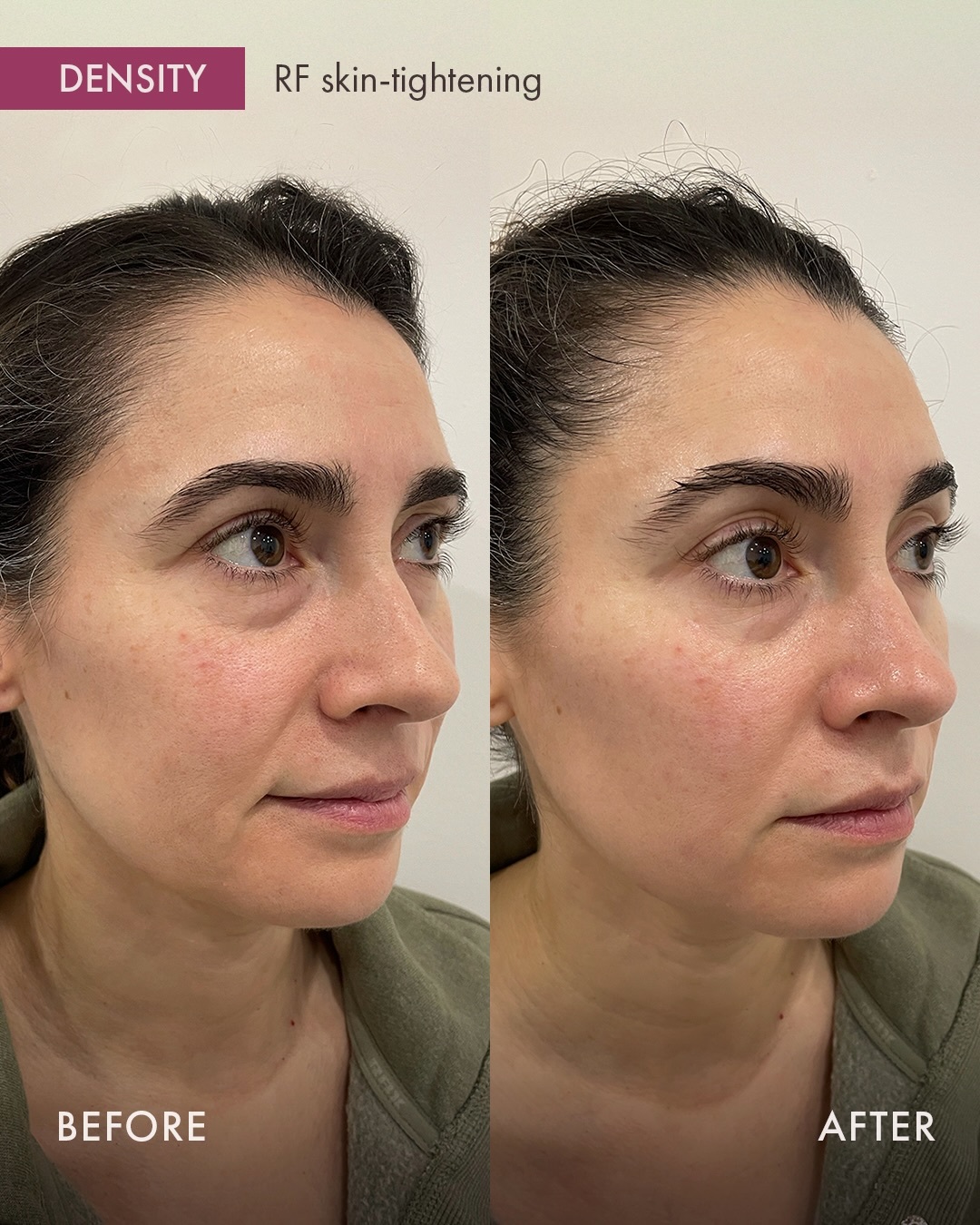
Real VIDA patients. Same angle, same lighting, no retouching. Every photo is labeled with the number of sessions and when it was taken, because a result you cannot date is not a result you can trust.
Safety, plainly
Density is an FDA-cleared radiofrequency platform, and monopolar RF has more than two decades of published clinical use in skin tightening across all Fitzpatrick skin types. The most common side effects are temporary: redness, warmth, and mild swelling in the treated area that typically resolve within hours. Rare effects reported with RF devices in general include blistering or changes in pigmentation, which is one of the reasons this treatment belongs in a medical setting with calibrated equipment and trained hands, and not on a spa menu between facials.
At VIDA, Density is performed inside a Quad A accredited surgical facility, under physician supervision, with energy settings calibrated in real time by the device’s impedance monitoring.
A med spa inside a surgical center, on purpose
Anyone can buy a machine. The result depends on who is holding it and what happens if you are not a candidate.
- Physician supervision. Every Density plan at VIDA is overseen by our medical team, in the same facility where our board-certified plastic surgeons operate.
- Honest triage. If your laxity is past what energy devices can fix, you will hear it here, with the surgical alternative explained in the same building, instead of being sold six sessions of something that cannot work.
- Quad A accredited facility. The same accreditation standard covering our operating rooms covers the space where your treatment happens.
- Minutes from the border. Most of our patients come from the United States. Treatment, coffee, and back across in an afternoon.
FAQs
Is Density a laser? No. Density uses radiofrequency energy, not laser light. RF heats the deeper layers of skin to stimulate collagen, does not target pigment, and can be used on all skin tones with no downtime.
How many sessions do I need? Most patients see improvement after one or two sessions spaced 4 to 6 months apart. Your provider confirms the plan at consultation based on your skin and goals.
Does Density hurt? Most patients describe deep warmth rather than pain. The tip has adjustable cooling and the device calibrates energy in real time. Topical numbing is available for sensitive areas.
When will I see results? Some firmness can appear within days as collagen contracts. The main change builds over 8 to 12 weeks, with published improvement measured out to 24 weeks after a single session.
How long do results last? New collagen does not wear off, but skin keeps aging naturally. Many patients maintain their result with one session per year after the initial protocol.
Is there any downtime? No. Mild redness or warmth can last a few hours. You can wear makeup, exercise, and return to normal activities the same day.
Who should not get Density? Anyone with a pacemaker or implanted electronic device, an active skin infection in the area, or who is pregnant. Significant excess skin usually needs surgery instead.
How is Density different from RF microneedling like Morpheus8? Density is needle-free with no downtime, working through intact skin. RF microneedling punctures the skin and targets texture and scarring. They solve different problems and are sometimes combined.
